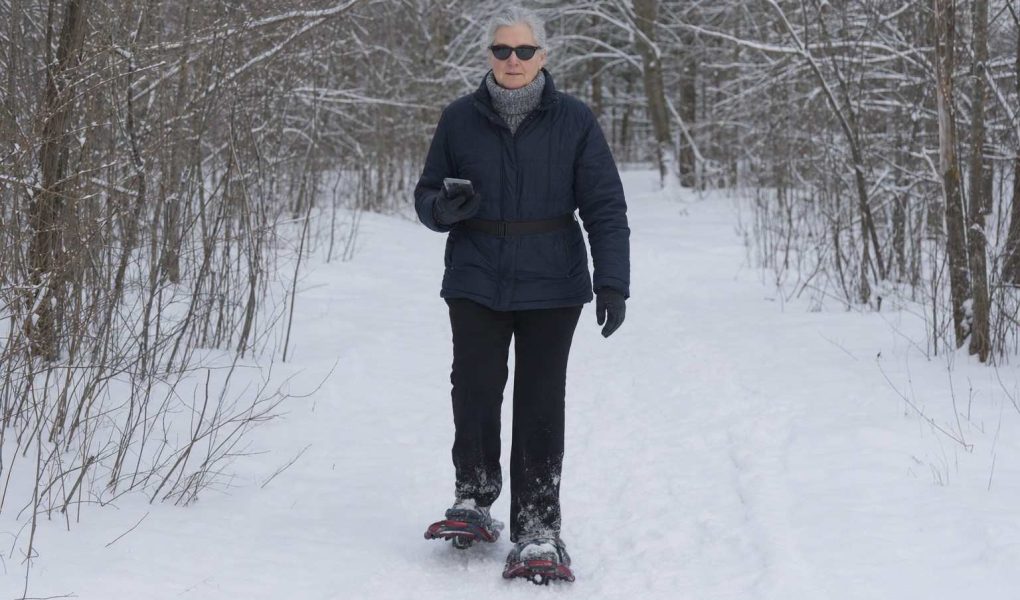
I am not going to pretend winter walking is always comfortable.
Some days it is cold, the trail is icy, and getting out the door takes more will than usual.
But the light in winter is unlike anything you get in summer. Low sun, long shadows, snow that catches early morning color. It is worth going for, if you go prepared.
A note before anything else: none of this is medical advice, and nothing here replaces checking current local conditions before you head out. If you have health concerns, talk to your doctor first. Winter walking is generally gentle and safe for most people, but you know your situation better than I do.
Why Snowshoeing Works for Beginners
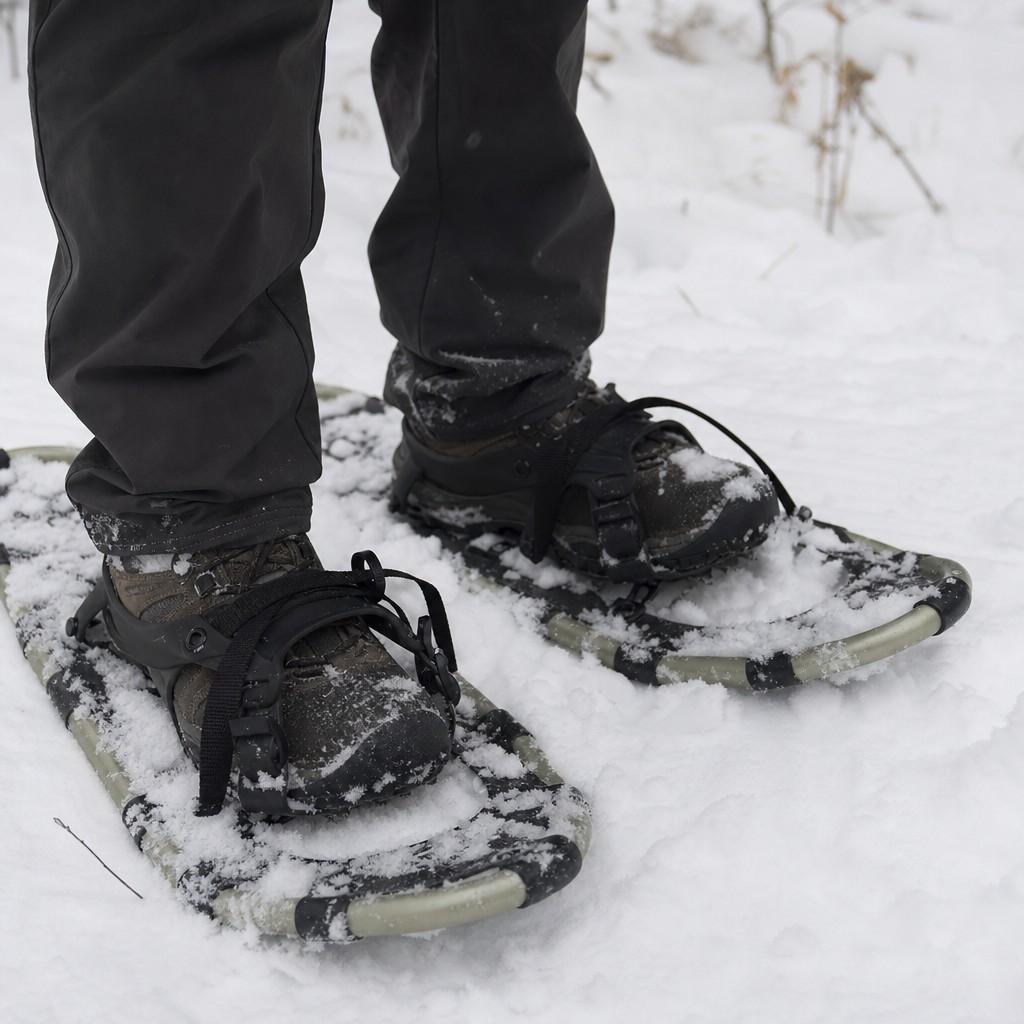
Snowshoeing has a reputation for being a specialist activity. It really is not.
If you can walk, you can snowshoe. The frames distribute your weight across the snow so you do not punch through, and the poles (optional but helpful) give you balance. That is basically the whole skill.
The pace is slow, the terrain is your choice, and you can stop whenever you want. For anyone who wants to stay active through winter without doing anything intense, it is a good fit.
If you are already a regular walker, my piece on the benefits of walking for staying active year-round covers why this time of year is worth pushing through.
Layering: The One Thing That Changes Everything
You do not need to spend a lot. But you do need to layer.
Cold sneaks up on you once you slow down or stop, especially if there is any wind. A layering system handles this because you can adjust on the go.
Three layers cover most winter conditions:
- Base layer. Something moisture-wicking against your skin, not cotton (cotton holds damp)
- Mid layer. Fleece or a light insulating jacket for warmth
- Outer layer. Wind and water resistant, to cut the wind and block snow
Wool socks matter too. Cold feet are the fastest way to cut a walk short.
Getting layering right means you stay out longer and enjoy it more. Getting it wrong means you are home in 20 minutes wondering why you bothered.
Footing: Where Most Beginners Go Wrong
Slipping on ice is the main practical risk of winter walking, and it catches people off guard because ice is not always obvious.
Compacted snow and shaded sections are where ice hides. Slowing down on those stretches costs you almost nothing.
For proper snowshoeing off-trail, the snowshoe frames give you grip. For icy paths and roads, lightweight traction cleats that slip over your shoes are worth having. They are cheap, they fit in a pocket, and they make a real difference on glazed surfaces.
For a fuller look at staying safe on ice and packed snow, my guide to safe winter walking on ice and snow goes into more detail on what to watch for.
Head, Face, and Hands
These are the places that get cold fastest and the places most beginners underprotect.
A hat, a buff or balaclava, and warm gloves are not optional in serious cold. Your body pulls heat away from your extremities first when it is working to stay warm.
Mittens are warmer than gloves. If you know it is going to be very cold, mittens with a liner glove inside give you flexibility. You can pull the liner out for tasks without fully exposing your hand.
Sunglasses or goggles matter more than people expect. Snow reflects light directly into your eyes, and on a bright day it is genuinely uncomfortable without eye protection.
Keeping Your Phone Working in the Cold
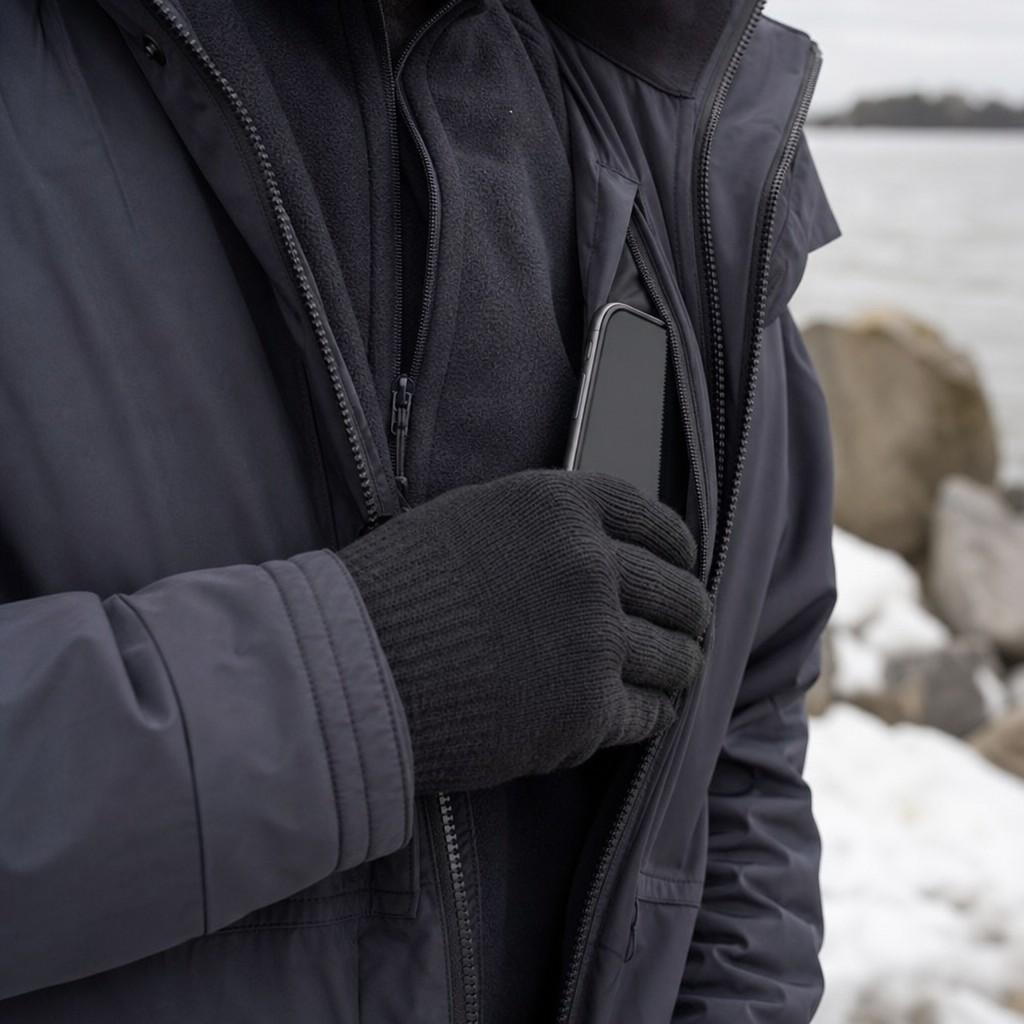
Cold drains phone batteries faster than almost anything else. I have ended a walk with a “dead” phone and found it came back to life the moment it warmed up. The battery was not drained, just cold.
Keep your phone in an inner pocket, against your body. That alone extends battery life significantly.
A few other things I have learned:
- Swap gloves for a touchscreen-compatible liner before you need to operate the phone, rather than pulling off a full mitten every time
- Let the phone warm up gradually before you plug it in after a cold walk. Sudden heat plus moisture causes condensation
- Wipe the lens before you shoot. Cold air puts frost on things, including your phone camera lens, and a fogged lens makes every shot soft
On the accessories side, a cheap clip-on mount lets you attach your phone to a pack strap or trekking pole and shoot without fumbling. A few dollars well spent. I cover what actually helps (and what is a waste of money) in my roundup of cheap phone photography accessories worth carrying.
A Word on Knowing When to Turn Around
No photo is worth getting into trouble for.
If the conditions change, turn around. That is the whole rule, and it sounds obvious until you are standing somewhere beautiful and do not want to leave.
Weather in winter moves faster than in summer. Check the forecast before you go, tell someone where you are headed, and give yourself more time than you think you need. A shorter walk you finish safely is always better than a longer one that becomes a problem.
Getting outside in winter is one of those habits that rewards you quietly. You come back colder and clearer, with photos nobody else bothered to take.
Start short, go prepared, and stay within your comfort zone. Winter is less intimidating than it looks from inside.