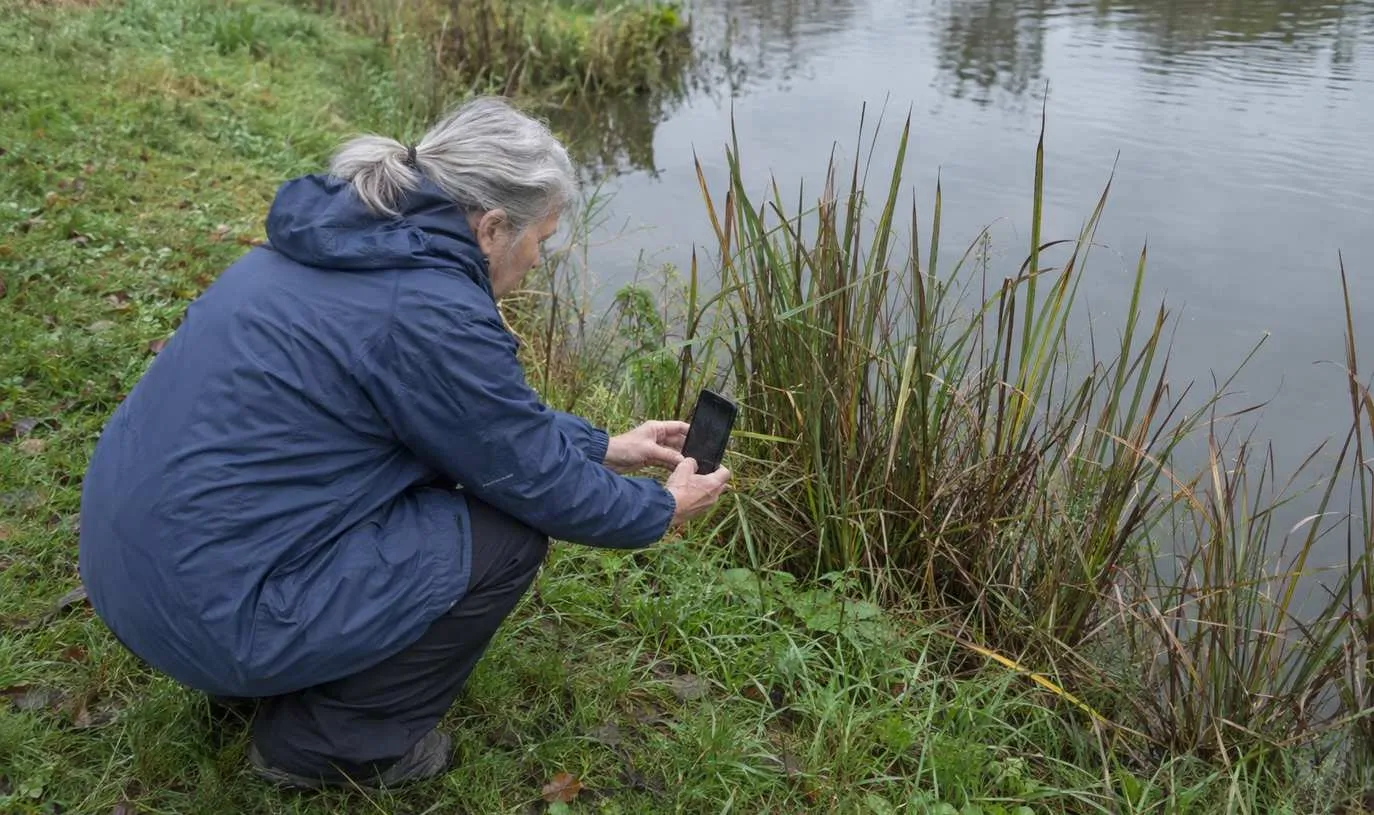
Two photos of the same pond, taken four minutes apart on a misty morning.
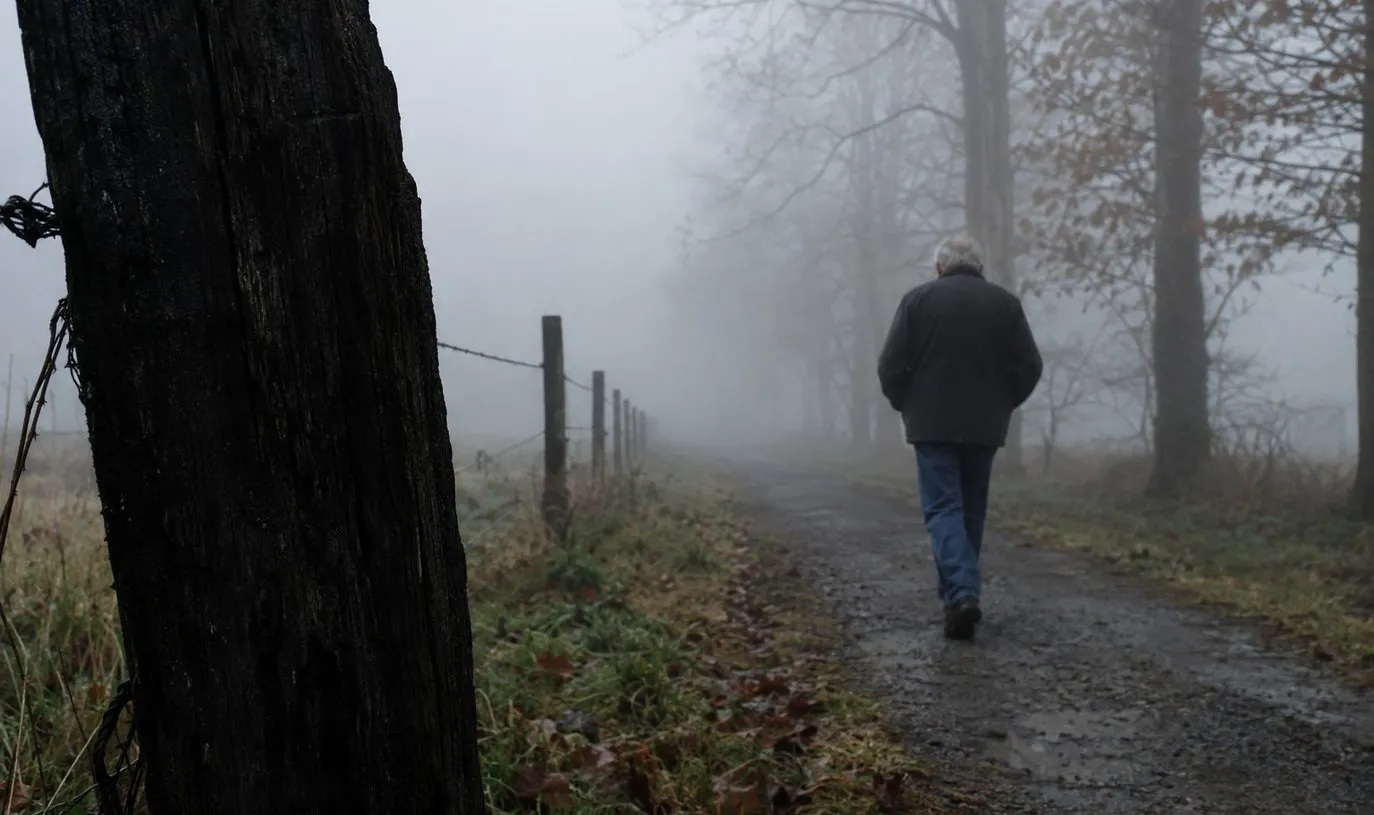
In the first, the mist is a pale smear and the water is a gray rectangle. In the second, a fence post stands black in the near corner and the reeds fade back into white.
Same fog, same phone.
The second one has something dark near the camera, and that is nearly the whole trick.
Fog does not photograph as fog unless there is something solid and dark in the frame for it to sit behind.
Why fog flattens a photo
Fog works by scattering light. Every droplet bounces a little of it around before it reaches you.
The effect is that distant things lose their edges and their darkness. A far tree line stops being dark green and turns pale gray.
That is exactly what makes fog beautiful to stand in.
It is also what makes it empty in a photo.
A photo needs a dark tone somewhere, and fog is busy removing every dark tone in the scene.
Your eye does not mind, because you can see the whole morning around you.
The frame can only show what is inside it.
Put something dark close to you
The fix is not a setting.
It is where you stand.
Find something solid within a few steps of the camera and put it in the frame. A fence post, a gate, a bench, a trunk, a dark branch overhead.
Close things are barely touched by the fog, so they stay dark while everything behind them goes pale.
One near-black shape in the foreground is what turns a gray photo into a foggy one.
The gap between that dark shape and the pale background is what a viewer reads as depth. Without it, the photo has no scale and nothing to hold on to.
On any misty morning, look for the nearest fence line. It takes ten seconds and it does more than any amount of fiddling with the camera.
Let the scene stack up
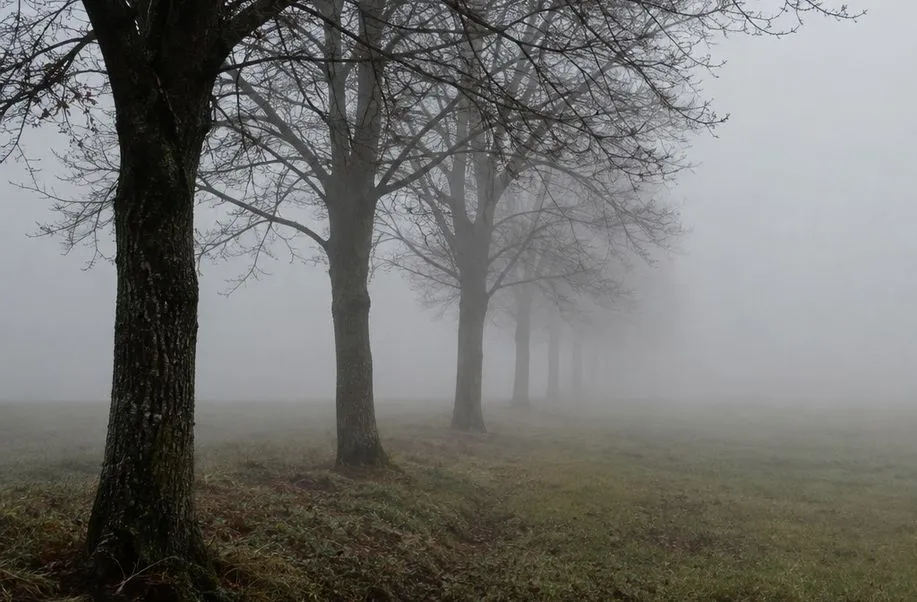
Fog is one of the few conditions that shows distance directly. Each layer further back is paler than the one in front.
So look for scenes that have layers. A line of trees stepping away from you, a curve of path, fence posts running into the distance.
Fog turns distance into tone, and a row of anything stepping backwards makes that visible.
A flat wall of mist with nothing at different distances gives you nothing to show.
Close things are barely touched by the fog, so they stay dark while everything behind them goes pale.
The phone will make it too bright
A camera aims for a middle brightness. Point it at a scene that is mostly pale gray, and it decides the photo is too bright and darkens it.
Point it at a dark wood with a patch of mist, and it does the opposite.
The result is usually a washed-out photo with the mist gone milky and the dark shape not dark any more.
Tap the pale mist, then drag the exposure slider down until it looks slightly darker than your eye says it should.
The same tap and drag rescues a flat white sky on any overcast day. Here it keeps the mist from going milky and leaves your dark shape dark.
Take two frames, one at the phone’s own setting and one darker.
It costs nothing, and you can see at home which call was right.
Your lens fogs up before the air clears
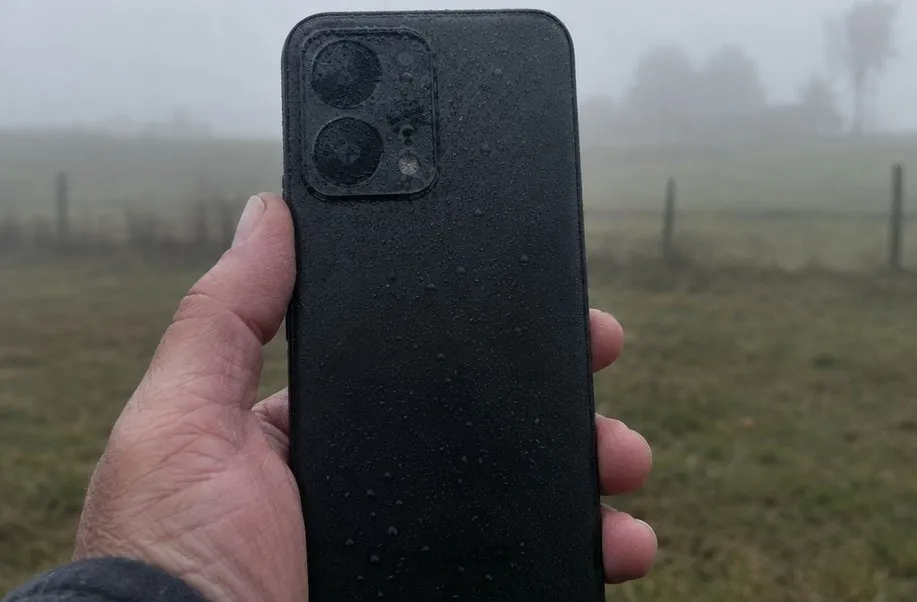
This one surprises people, and it has nothing to do with the weather.
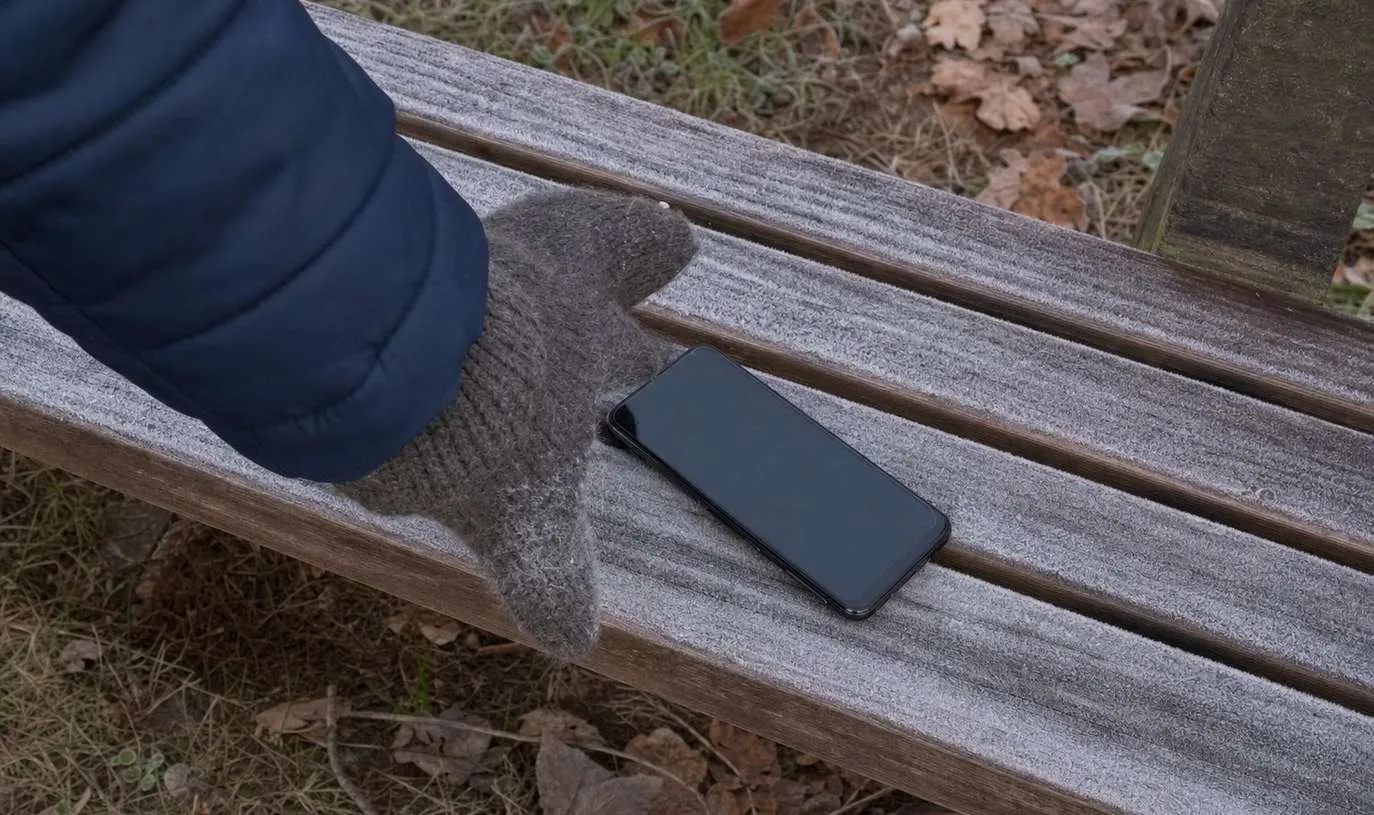
Carry a phone from a warm car or a warm house into cold damp air, and moisture condenses on the cold glass. Every photo comes back with a soft glowing haze over it.
Condensation forms on the lens when a warm phone meets cold damp air, and it takes a few minutes to clear.
Two habits deal with it:
- Let the phone cool before you start. Stand outside for a couple of minutes with it out of your pocket.
- Wipe the lens, then check a test shot. If the haze is still there, the glass is still warm.
Cold mornings are hard on a phone in another way too. A cold battery reads low and the phone can shut down early before you are finished.
Where to find fog on a normal walk
You do not have to chase it.
Fog settles in predictable places, and most walks pass at least one of them.
- Over water. Ponds, rivers and lakes hold warmth overnight and steam into cold air above them.
- In low ground. Cold air sinks, so valleys, dips and hollows fill first and clear last.
- Early. The best of it is usually in the first hour after sunrise, and it thins fast once the sun is up.
A clear cold night followed by a still morning is the combination that puts mist on the water.
Check the sky before bed rather than the forecast in the morning. By the time you look out and see it, you have maybe an hour.
Go while it lasts
Fog is the one condition that will not wait for you. It burns off, often within the hour, and the same walk an hour later is just a damp morning.
Go out with a fence line or a stand of trees in mind, get close to something dark, and shoot darker than feels right.
Then have a look at what the same approach does for scenic landscapes once the mist has gone.