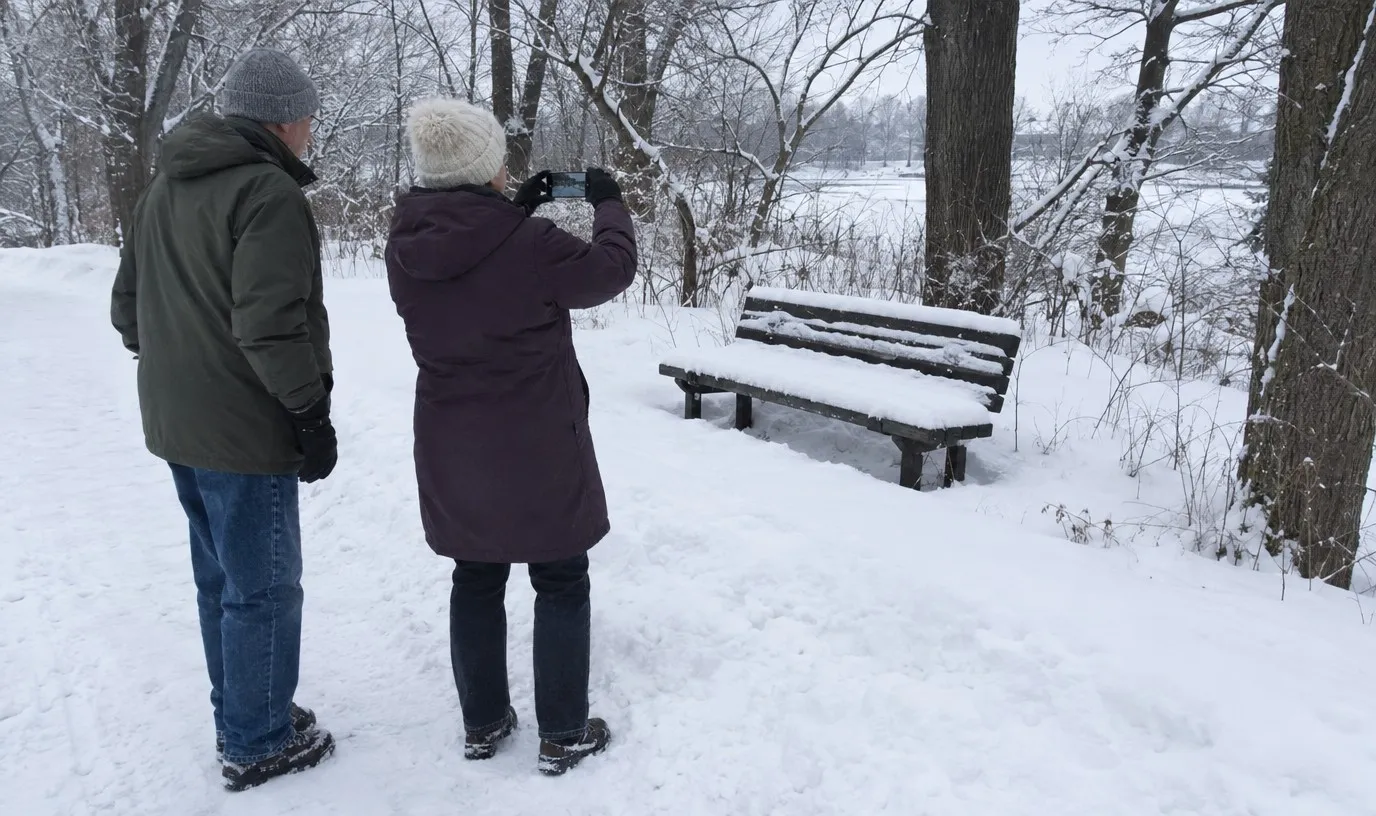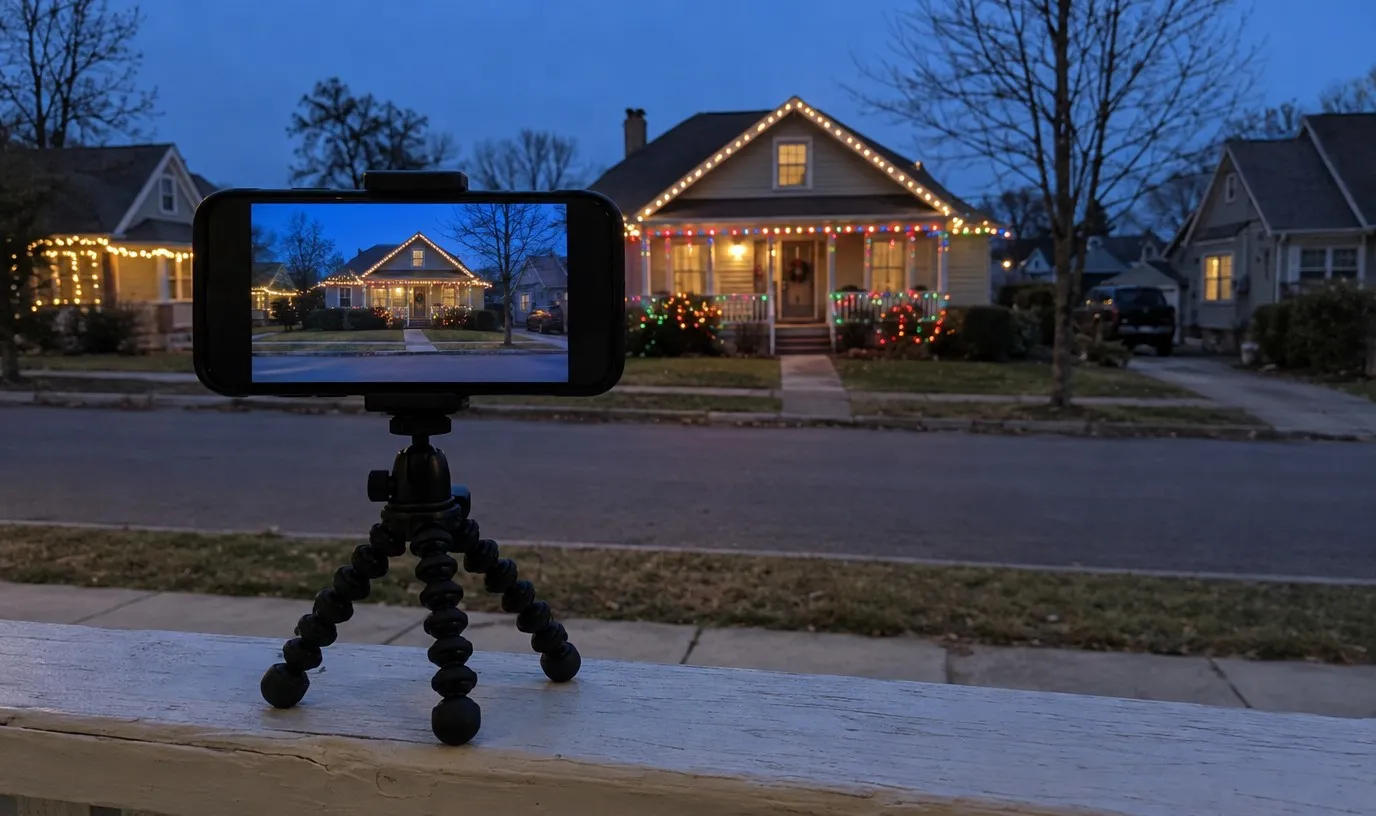
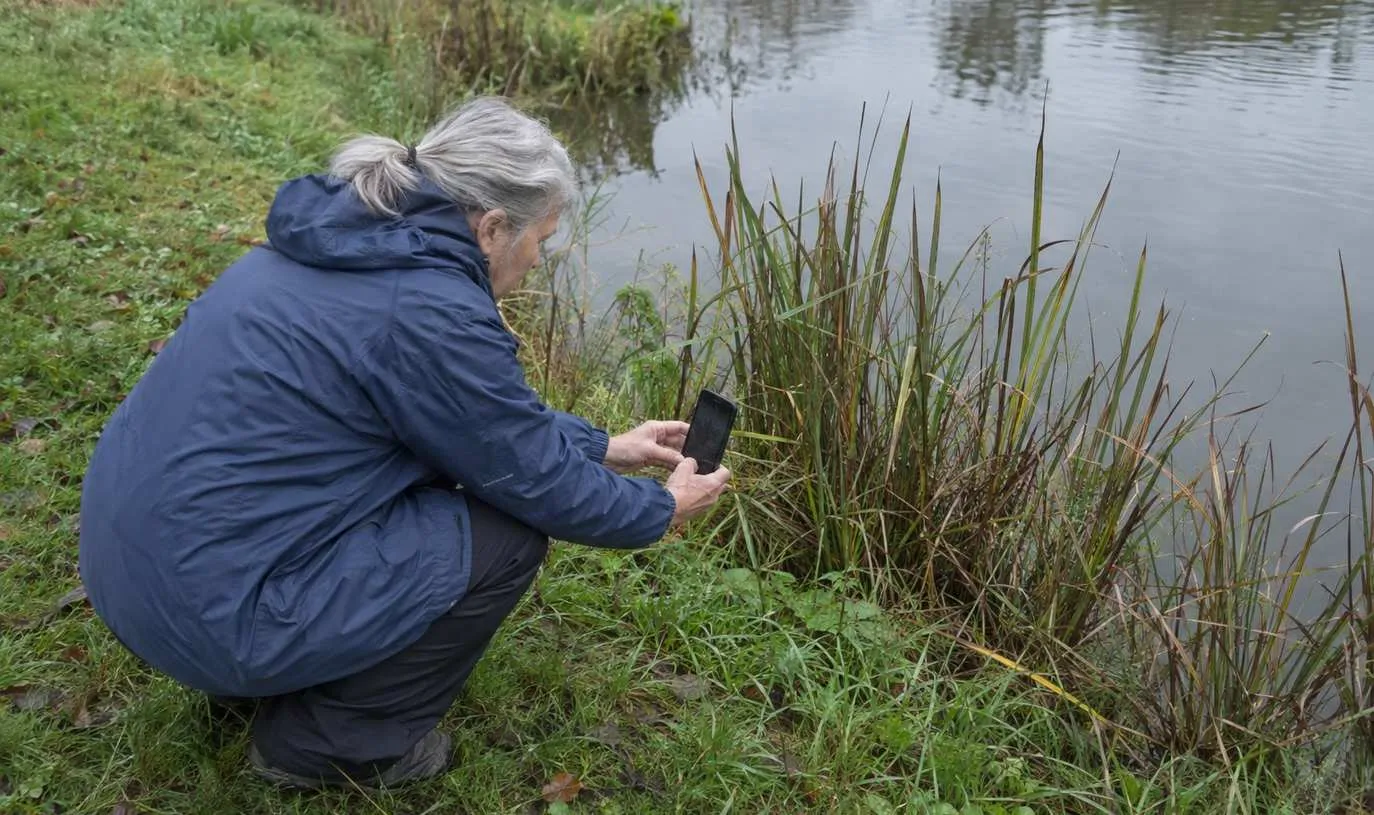
You looked out at a flat gray sky this morning and decided it was not a photo day.
That decision throws away a lot of good light.
Overcast light is the easiest light to shoot in, and it suits more subjects than bright sun does.
What a gray day will not give you is a dramatic sky. Point the phone below it instead: at color, faces, the woods, still water and anything close.
Why flat light is good light
Cloud cover spreads sunlight out. Instead of arriving from a single bright point, the light reaches your subject from the whole sky at once.
That removes the hard edge. No black shadow across a face, no white patch on a wet leaf where the detail has gone.
Soft light lets the camera hold the dark parts and the bright parts of a scene in the same photo.
A phone struggles most with contrast. It blends several frames to stretch its range, but bright sun can still push a scene past it, and then one end goes.
Gray light gives it a scene it can actually fit.
The subjects a gray day improves

Not everything gains. These do, and every one of them is on an ordinary walk.
- Color. A red leaf reads as red instead of washing out to pale orange.
- Faces. Nobody squints, and no shadow cuts across the eyes.
- The woods. Under trees, sun makes a mess of bright patches and deep shade. Cloud cover evens it out.
- Water. On a calm morning a pond or a puddle picks up the soft sky and turns into a smooth gray mirror.
- Fine detail. Bark, moss, rust and lichen. Hard contrast swallows small texture, and flat light keeps it.
- Anything close. A flower, a gate latch, a mushroom. The closer you get, the less the sky matters.
Gray light suits subjects made of color and detail, and it suits them better than sun does.
Even the dullest walk, a ten-minute loop past a drainage pond, can pay off. On a still gray morning the water goes flat and silver, and the reeds along the edge keep a color that noon sun washes out.
The white sky, and the tap and drag that fix it
One problem ruins more gray-day photos than any other. The sky comes back as a blank white shape.
That is not the phone failing. It is the phone doing what you asked it to.
A bright overcast sky is far brighter than the ground beneath it. The camera picks an average, and the sky ends up brighter than the phone can record.
Set the brightness for your subject and the sky together, and accept a frame that looks a touch dark.
A slightly dark photo usually keeps more color than a bright one. Go too dark, though, and the shadows turn to mud.
Two moves, in this order:
- Tap the subject. The phone focuses there and sets its brightness on it.
- Drag down. On an iPhone, slide the small sun icon beside the tap down. On a recent Pixel, the brightness slider sits behind the adjust button at the bottom right. Other phones vary.
Stop when the sky shows a little gray and the subject still has detail. If the subject goes muddy before the sky returns, the scene has more contrast than one photo holds.
That is not the phone failing. It is the phone doing what you asked it to.
Leave the sky out of it
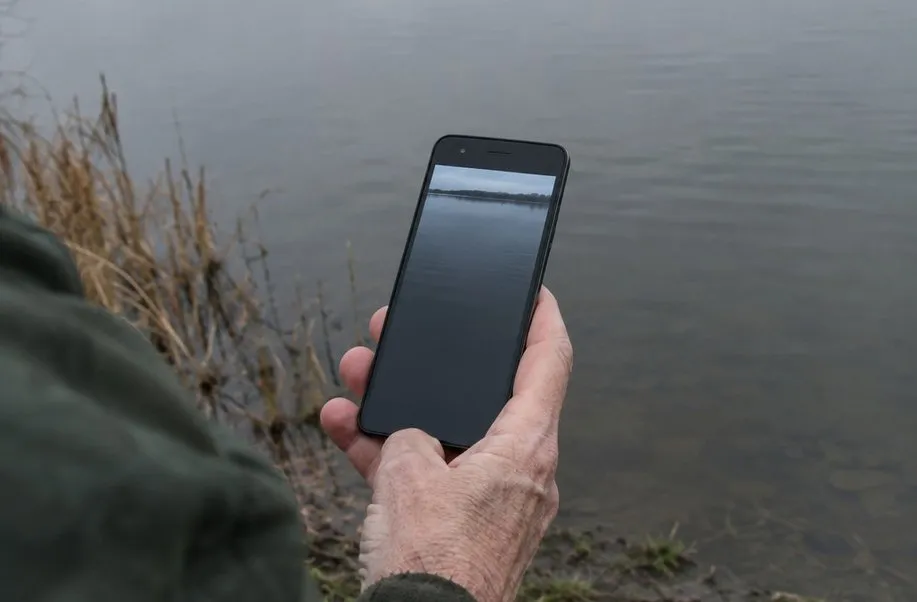
The second fix is simpler than the first, and it works when the first one cannot. Do not put the sky in the photo at all.
A flat white sky is not a subject. It is empty space filling a third of the frame and giving nothing back.
Tilt the phone down until the horizon sits near the top of the frame, or out of the frame entirely.
Now the photo is made of the things that actually gained from the light. The path, the water, the trees, the color.
The same habit makes a dull view work at any hour. Of all the simple composition habits, it is the one that helps fastest.
When a gray day is the wrong day
Flat light is not the answer to everything, and pretending otherwise would waste your morning.
Three things need a sun you do not have today:
- Long shadows. A shadow crossing the frame gives a photo its shape, and only low sun makes one.
- Glow. Backlit grass and leaves light up from inside. Clouds cannot do that.
- Texture across a surface. Light raking sideways over stone or a weathered fence needs a direction.
If any of those is what you pictured, wait for the low sun and shoot golden hour instead.
Heavy cloud cover also gets genuinely dark under trees. The phone answers by holding the shutter open longer, and your own small movements start to show.
Brace the phone against a trunk or a rail, or use a small clip mount or pocket tripod.
Your next gray morning
You do not need to wait for better weather to go out. The weather you have suits most of what is worth photographing near you.
Walk your usual route, keep the horizon high in the frame, and shoot the things you can get close to.
A still, cold gray morning sometimes brings mist over the water as well. That needs its own approach: how to photograph fog with your phone.
Otherwise, see what flat light does for scenic landscapes once you stop working against it.